

The long-pending Teesta Water Sharing Agreement, stalled since 2011, and the Ganga Water Sharing Treaty, due for renewal in 2026 after the completion of its 30-year term, are expected to dominate discussions between New Delhi and Dhaka in the coming months.
The Teesta agreement was originally scheduled to be signed during former Prime Minister Dr. Manmohan Singh's landmark visit to Bangladesh in 2011. However, the deal collapsed at the last moment after then West Bengal Chief Minister Mamata Banerjee withdrew her support. Her opposition also extended to the 1996 Ganga Water Sharing Treaty, which now requires renegotiation.
The Bharatiya Janata Party has held Mamata Banerjee and the former Trinamool Congress government responsible for obstructing what it describes as a vital strategic and diplomatic objective. Former Foreign Secretary and Bharatiya Janata Party Rajya Sabha Member Harsh Vardhan Shringla stated that the West Bengal government consistently prevented the Union Government from concluding the Teesta Agreement.
Shringla recalled that he was serving as Joint Secretary handling Bangladesh and neighboring countries in 2011 when the agreement was ready for finalization. According to him, Mamata Banerjee refused at the last moment to endorse the arrangement. He emphasized that water is a concurrent subject under the Constitution of India, requiring the cooperation of state governments for both treaty approval and implementation. He further said there were no substantive reasons for West Bengal's continued opposition.
The Teesta River originates from Tso Lhamo Lake in North Sikkim and flows through the eastern Himalayas across Sikkim and West Bengal before entering Bangladesh near Mekliganj in Coochbehar district.
After years of delay, Bangladesh has formally sought Chinese participation in the Teesta River Comprehensive Management and Restoration Project. This development has significantly altered the strategic dimensions of the issue, as the project is located in one of the most sensitive regions along India's eastern frontier.
Experts believe the prolonged delay has transformed the Teesta dispute from a conventional water-sharing disagreement into a broader national security concern. Uttam Kumar Sinha, a leading scholar and commentator on transboundary rivers, climate change, and the Arctic, said Dhaka had little choice but to turn to Beijing after waiting for years for progress on both water sharing and basin management.
He noted that China has repeatedly expanded its influence across South Asia by leveraging India's hesitation, offering financing, engineering expertise, and rapid execution. Sinha argued that the Teesta issue is now intrinsically linked to India's security interests because the project area lies approximately 30 to 50 kilometers south of the Siliguri Corridor, commonly known as the Chicken's Neck, the narrow land corridor connecting mainland India with its northeastern states.
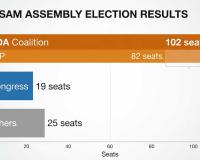
The Bangladesh Nationalist Party has already sent a congratulatory message to the Bharatiya Janata Party following its electoral victory in West Bengal, coupled with a request to revisit the Teesta agreement. With the Bharatiya Janata Party now governing West Bengal, analysts believe the principal domestic obstacle to the Teesta accord has effectively disappeared.
At the same time, Bangladesh is expected to adopt a firm negotiating position on the renewal of the Ganga Water Sharing Treaty. The country plans to construct the Padma Barrage downstream of the Farakka Barrage in West Bengal, despite ongoing internal scrutiny and concerns within Bangladesh.
The Ganga River is known as the Padma immediately after entering Bangladesh, approximately 22 kilometers downstream from the Farakka Barrage in Murshidabad district, West Bengal.
Speaking on the implications of the proposed project, Uttam Kumar Sinha said the Padma Barrage makes renewal of the Ganga Treaty more important than ever. He explained that large downstream hydraulic infrastructure requires predictable dry-season water flows. Without guaranteed lean-season allocations from India, the viability of the Padma Barrage would remain uncertain.
According to Sinha, Bangladesh is strategically positioning the Padma Barrage project to strengthen its demand for assured water allocations during treaty negotiations.
A Bangladeshi delegation is scheduled to participate in the 90th Joint Committee Meeting of the Joint Rivers Commission in Kolkata this week. The delegation will also visit the Joint Flow Measurement Site at the Farakka Barrage in accordance with provisions of the 1996 Ganges Water Sharing Treaty.
Prime Minister Tarique Rahman's administration has placed water security at the core of its national agenda. His political party, the Bangladesh Nationalist Party, has a longstanding reputation for grassroots canal excavation programs designed to expand agricultural production by ensuring reliable irrigation.
The Bangladesh Nationalist Party's election manifesto explicitly identified unresolved river-water sharing as a cornerstone of its foreign policy. The manifesto pledged to adopt effective measures to secure what it described as a fair share of waters from common rivers such as the Teesta and the Padma, signaling renewed pressure on one of the most politically sensitive issues in India-Bangladesh relations.
Analysts believe domestic political considerations in Bangladesh will heavily shape the government's negotiating strategy. Sinha warned that India should prepare for difficult discussions, noting that the current political leadership in Dhaka is under pressure to demonstrate autonomy in its relationship with New Delhi.
He also pointed out that the original Ganga Water Sharing Treaty was signed in 1996 under a Bangladesh Awami League government, adding another layer of political significance as the Bangladesh Nationalist Party seeks to redefine its own diplomatic legacy.
As India and Bangladesh enter a decisive period in their water diplomacy, the outcomes of negotiations over the Teesta and Ganga rivers will carry consequences far beyond resource sharing. The agreements will test the strategic trust between the two neighbors, influence regional security dynamics, and shape the future balance of power in South Asia.
About The Author









Comment List